


 Deutsch
 English
 Español
 Français
 Nederlands
 Português


 Share
Share




The transatlantic trade relationship has entered its most turbulent phase since the 1930s. In 2026, a new wave of US-EU tariff escalation is forcing multinational corporations to fundamentally restructure global supply chains. Washington has imposed sweeping 10–15% reciprocal tariffs under Section 122 of the Trade Act of 1974, while Brussels retaliates with targeted countermeasures on American agricultural goods, machinery, and chemicals. The economic fallout is severe: roughly $1,500 in added costs per US household and billions in losses for automakers, as the EU leverages its Carbon Border Adjustment Mechanism (CBAM) as a negotiating tool.
Background: The Collapse of the Turnberry Agreement
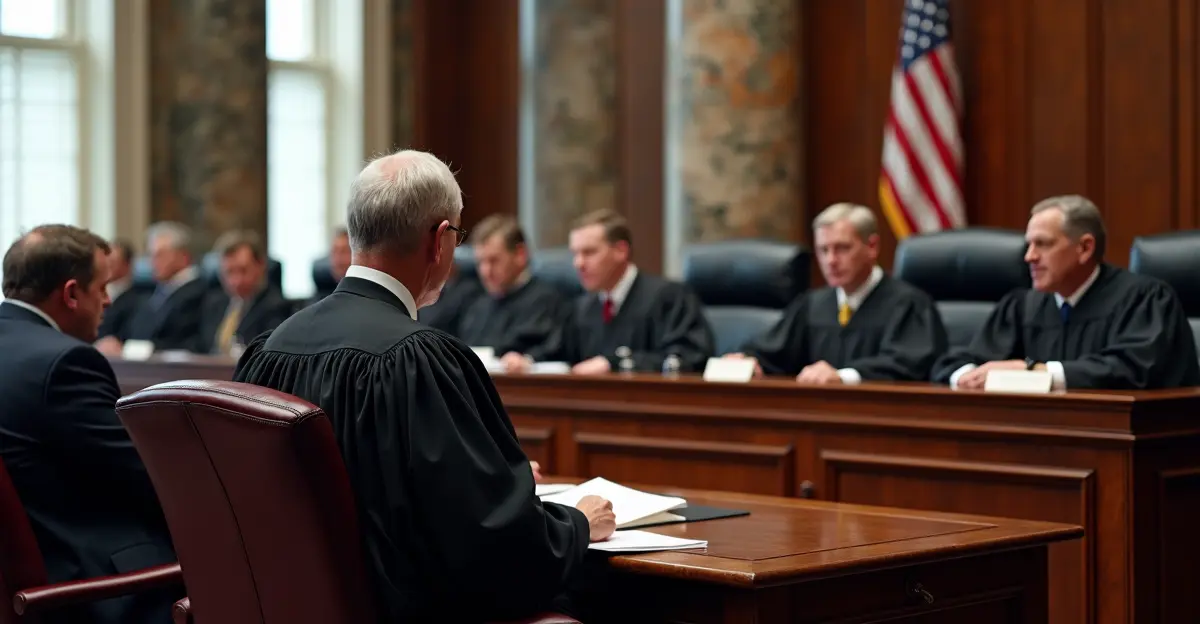
The EU-US trade framework deal, signed in July 2025 as the Turnberry Agreement (also called the Scotland Accord), was supposed to de-escalate tensions. It established a 15% tariff baseline in exchange for $600 billion in European investments in US energy and infrastructure. But by February 2026, the deal lay in ruins. On February 20, the US Supreme Court ruled 6–3 in Learning Resources, Inc. v. Trump that the International Emergency Economic Powers Act (IEEPA) does not authorize the President to impose tariffs, striking down the previous IEEPA-based reciprocal tariff regime. Hours later, President Trump invoked Section 122 of the Trade Act of 1974, imposing a flat 10% tariff on all imports from all countries, effective February 24. The EU responded by halting ratification of the Turnberry Agreement and preparing retaliatory tariffs.
How Section 122 Reshaped Tariff Policy
Section 122 (19 U.S.C. § 2132) allows the president to impose tariffs of up to 15% for up to 150 days in response to "large and serious" balance-of-payments deficits. The new 10% global surcharge replaced a patchwork of IEEPA rates that had ranged from 10% to 46%. Key exemptions include critical minerals, energy products, certain agricultural goods, pharmaceuticals, electronics, and aerospace products. However, Section 122 tariffs stack on top of most other duties, including Section 301 China tariffs (25–100%) and Section 232 national security tariffs (steel 25%, aluminum 10%, autos 25%, copper 50%). The surcharge is set to expire on July 24, 2026, unless Congress acts to extend it. Treasury Secretary Bessent has signaled the rate could be raised to the 15% statutory maximum.
EU Retaliation: A Two-Package Strategy
The European Union has prepared a calibrated response. The first package, affecting approximately €21 billion in US goods, targets iconic American products such as bourbon whiskey, Harley-Davidson motorcycles, and orange juice. The second, larger package—revised from an estimated €95 billion to €72 billion after intense lobbying—hits industrial goods hardest (nearly €66 billion), with aircraft products topping the list at over €10 billion, followed by passenger vehicles and medical appliances. Agricultural and food products account for €6 billion. Notably, diagnostic reagents, gas turbines, X-ray apparatus, and semiconductor-making equipment were removed from the list. The first package is set for August 6, 2026, with the second to follow if no negotiated solution is reached.
Supply Chain Restructuring: Triple-Redundancy Takes Hold
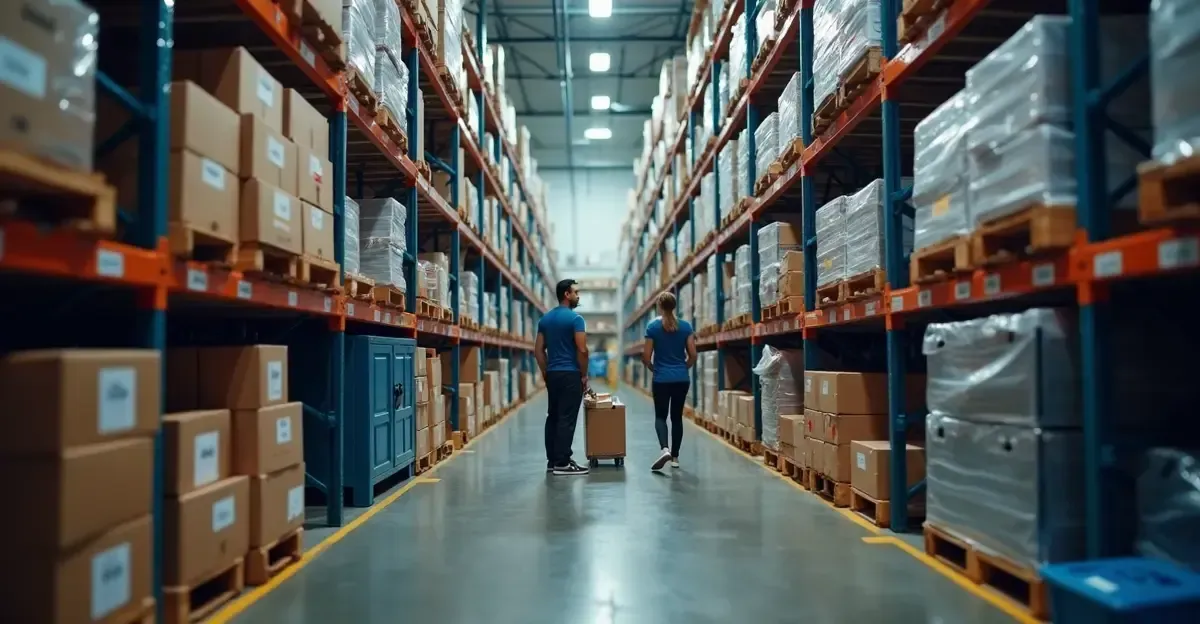
The transatlantic trade war is forcing a fundamental shift from just-in-time (JIT) efficiency to a "triple-redundancy" strategy—maintaining parallel production across North America, Europe, and Asia at a 15–25% higher cost. This restructuring is driven by three policy developments: the US MATCH Act tightening semiconductor export controls, the EU's CBAM entering full force in January 2026, and geoeconomic confrontation being named the top global risk by the World Economic Forum. US-China bilateral trade has fallen roughly 30% from peak levels. Key nearshoring winners include Vietnam (electronics, $36 billion in FDI), India (pharmaceuticals), and Mexico (automotive, leveraging USMCA access). Companies investing 3–5% of supply chain spend on resilience are achieving risk-adjusted ROI of 150–300% over three years.
Automakers Hit Hardest
The automotive sector is bearing the brunt of the disruption. European automakers face cumulative US tariffs of up to 30% (2.5% MFN + 10% Section 122 + potential Section 232 auto tariffs of 25%). Volkswagen has reported €1.1 billion in losses, while Airbus saw an 8% share drop. LVMH's Wines & Spirits division suffered a 25% profit decline. US automakers are not spared: Ford and General Motors face higher costs for European-sourced components and lost export markets. The effective US tariff rate has hit 11.0%—the highest since 1943—costing the average household $650–$780 in 2026, with projections rising to $1,130–$1,340 if Section 122 is made permanent.
The EU's CBAM as a Negotiating Lever
The EU Carbon Border Adjustment Mechanism, which entered its definitive regime on January 1, 2026, is emerging as Brussels' most powerful bargaining chip. CBAM requires importers of cement, iron and steel, aluminum, fertilizers, electricity, and hydrogen to purchase certificates priced according to the EU Emissions Trading System (ETS). By 2030, all ETS-covered sectors will be included, and free allowances will be phased out by 2034. The EU is using CBAM to pressure the US to adopt a domestic carbon price, which would allow American exporters to deduct that cost from their CBAM obligations. This creates a direct link between climate policy and trade negotiations, giving the EU leverage it lacked in previous disputes. Similar carbon border adjustment policies are being explored by the UK, Canada, and Australia, potentially creating a new global trade norm.
Expert Perspectives
"This is the most consequential transatlantic economic story of the year," says Oliver Smith, the author of this analysis. "The Supreme Court ruling and the subsequent Section 122 tariffs have fundamentally altered the landscape. We are witnessing a permanent restructuring of global production, not a temporary adjustment." The Yale Budget Lab estimates that tariffs will raise approximately $1.0–$1.1 trillion in net dynamic revenue over 2026–2035, but long-run GDP will be persistently 0.1% smaller—roughly $27 billion annually. Manufacturing output expands 0.7%, but construction contracts 2.0% and mining declines 0.8%.
FAQ: EU-US Tariff Escalation 2026
What is Section 122 of the Trade Act of 1974?
Section 122 allows the US president to impose tariffs of up to 15% for up to 150 days to address "large and serious" balance-of-payments deficits. It was invoked on February 20, 2026, after the Supreme Court struck down IEEPA-based tariffs.
How much will US households pay due to 2026 tariffs?
Estimates range from $650–$780 per household in 2026 under the current 10% Section 122 surcharge, rising to $1,130–$1,340 if the surcharge is made permanent. Total costs including previous tariffs could reach $1,500 per household.
What is the EU's CBAM and how does it affect US exports?
The Carbon Border Adjustment Mechanism is a carbon tariff on imports of cement, steel, aluminum, fertilizers, electricity, and hydrogen. US exporters must pay a fee based on the EU ETS carbon price, unless they can prove a domestic carbon price was already paid.
Which sectors are most affected by the trade war?
Automotive, aerospace, machinery, chemicals, and agricultural sectors are hardest hit. European automakers face cumulative tariffs up to 30%, while US agricultural exports to the EU face retaliatory duties on products like soybeans, bourbon, and orange juice.
Will the Section 122 tariffs expire in July 2026?
Yes, Section 122 has a hard 150-day time limit, meaning the 10% surcharge expires around July 24, 2026, unless Congress votes to extend it. The Treasury Secretary has signaled the rate could be raised to 15% before expiration.
Future Outlook
The 2026 trade war outlook remains highly uncertain. A scheduled "one-year health check" of the Turnberry Agreement in July 2026 could provide a pathway to de-escalation, but the EU's halt on ratification and ongoing legal battles at the US Court of International Trade suggest a prolonged confrontation. The shift toward a post-WTO trade order, with regional blocs and carbon-based tariffs, appears irreversible. Multinational corporations must plan for a world where transatlantic supply chains are permanently fragmented, and resilience trumps efficiency.



Follow Discussion